Transaction Fee Structure
Payment service providers typically charge per-transaction fees that can vary based on payment method.
Credit card processing usually carries the highest fees (2-3% of the transaction amount), while ACH transfers tend to be more economical (often under $1 per transaction).
Consider providers that can either absorb these fees or pass them on to residents as convenience fees, giving your association flexibility in managing costs.
Monthly Service Charges
Most providers charge recurring monthly fees for their service. These fees might be flat-rate or based on your community size or transaction volume.
Look for transparent pricing with no hidden fees. Some providers offer tiered pricing plans that can provide better value as your community grows. Consider whether features like reporting, customer support, and system updates are included in the base fee or require additional charges.
Total Cost of Ownership
Calculate the total cost of ownership by considering all expenses over a multi-year period.
Include direct costs like setup fees, monthly charges, and transaction fees, as well as indirect costs such as staff training time, support requirements, and potential integration expenses.
Compare this against the benefits and cost savings from automated processes, reduced late payments, and improved cash flow to determine the true ROI of each solution.

User Experience Factors
The success of your HOA payment service ultimately depends on how easily both residents and administrators can use it. A clunky or confusing interface will frustrate residents, increase support calls, and delay payments.
Resident Experience
Your payment portal should feel as familiar and intuitive as online banking. Residents should be able to make payments, view their account history, and set up autopay without hunting through complex menus. The payment process should take only a few clicks, with saved payment methods and quick-pay options for regular dues.
Administrative Tools
Board members and property managers need streamlined tools that simplify daily tasks.
The administrative dashboard should provide at-a-glance insights into payment status, with easy access to common functions like payment processing, resident communications, and report generation.
Mobile-First Design & Accessibility
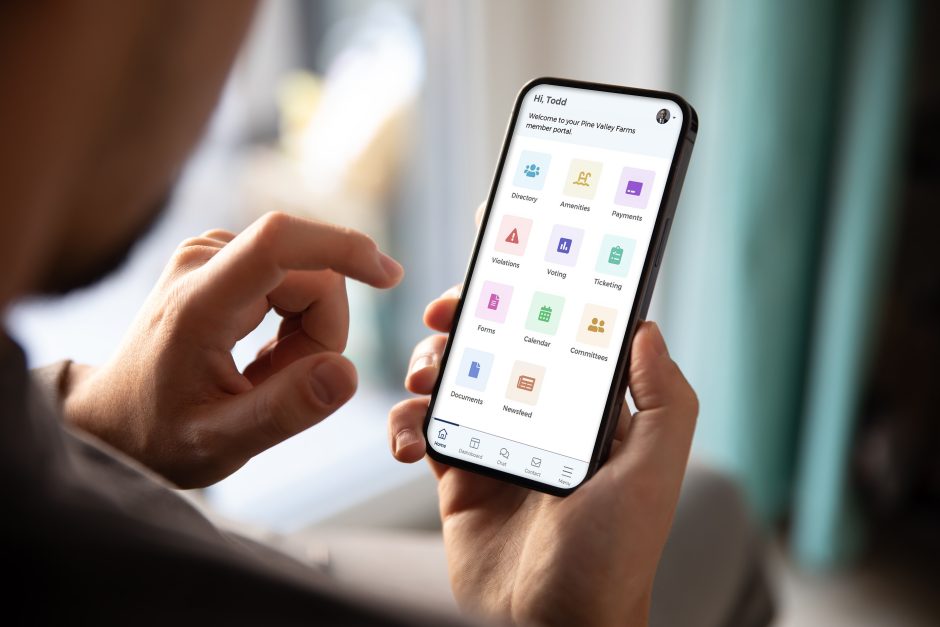
Look for services built with mobile users in mind, not desktop interfaces squeezed onto smaller screens.
The mobile experience should include touch-friendly buttons, readable text without zooming, and forms optimized for smartphone keyboards. Payment processes should be streamlined for mobile users, with digital wallet integration and the ability to save payment information securely.
Consider whether your community needs a dedicated mobile app or if a responsive mobile website is sufficient. Mobile apps can offer enhanced features like push notifications and fingerprint authentication, but they require residents to download and update another app. A well-designed mobile website can provide similar functionality without the extra step of app installation.